Between July and September 2025 this store sent zero email campaigns. Email made $24.2k a month, all from flows, which was 6.1% of revenue. In September 2026 email made 43.2% of revenue.
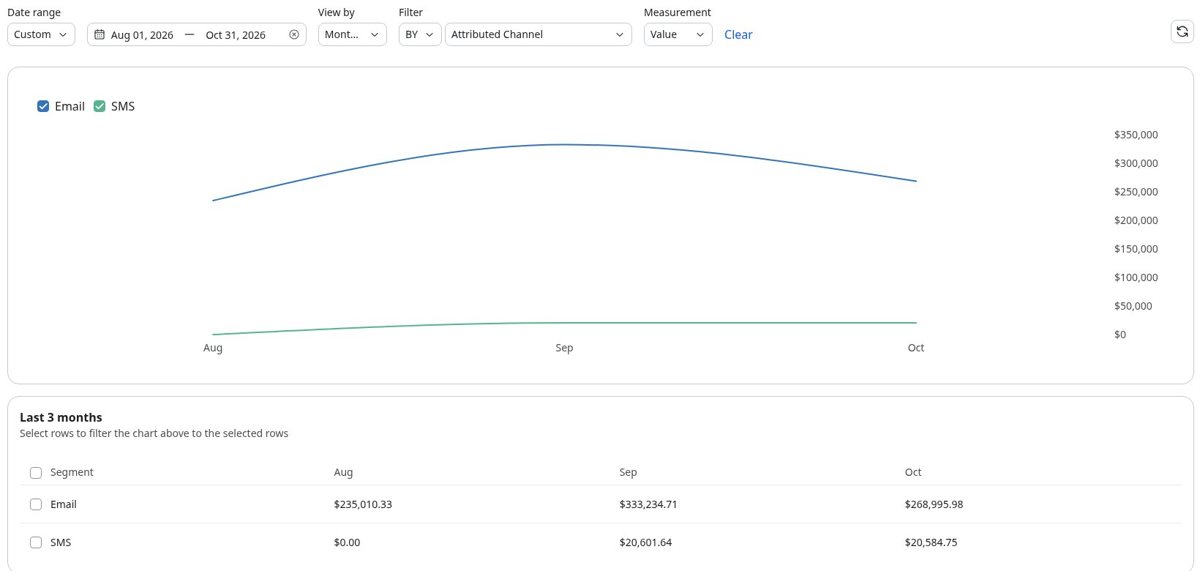
- Email revenue: $24.2k a month before, $292.8k a month now (average of August to October 2026)
- Share of store revenue from email: 6.1% to 35.9%, peak 43.2% in September 2026
- 13.9x more email revenue in August to October 2026 than in the same months of 2025
- $3.24M from email since October 2025
- November email revenue: $30.0k in 2024, $272.3k in 2025
The retailer sells home saunas and sauna heaters in the US, indoor and outdoor, infrared and traditional, from a range of manufacturers. Most products cost thousands of dollars. Buyers are homeowners who care about their health and want something that will last, and they take their time. Nobody orders an outdoor sauna on a whim.
The starting point
When we started in October 2025, email was an afterthought. In the three months before, it made $24.2k a month, all of it from flows, with no campaigns at all. That's 6.1% of revenue, low for any store and very low for one where buyers research for weeks.
That long research phase is the whole opportunity. Someone looking at a sauna that costs thousands visits the site again and again. They compare models, measure the yard and try to figure out what installation will cost. If the store isn't in their inbox during that time, a competitor will be.
The store also had a few constraints we had to work with. It doesn't give first-time buyers a coupon or a free gift. Many manufacturers set minimum advertised prices, so sales have to be planned carefully. And the best price on a given model is often given by phone or chat.
What we built
Flows for a long buying cycle
In the first weeks we rewrote the full flow set: a welcome series, site abandonment, browse abandonment, checkout abandonment, post-purchase and a winback. In July 2026 a quiz flow followed, for people who aren't sure which type of sauna fits them.
The welcome series doesn't push a discount, because there isn't one. It works on the questions that stop people. The big one is what a sauna really costs over the years. Close behind comes installation, and then there's the worry of picking the wrong size. Abandonment flows follow the same idea, because somebody who left a sauna worth thousands in their checkout usually needs an answer more than a reminder.
Post-purchase matters in a different way here. A sauna is delivered, set up and then used for years, so these emails cover what happens between order and first use, and they ask for a review once the buyer has actually sat in it. Reviews from real owners then feed back into the welcome series and the campaigns, where they do more convincing than any claim the store could make about itself.
Segments by intent
Campaigns go to engaged profiles first. Where the data allows, the angle follows what people looked at, so someone eyeing outdoor models hears about winter use rather than small indoor cabins. Past buyers don't get pitched a sauna they already own. That sounds obvious, but plenty of stores still send every campaign to every profile.
Campaigns from zero
The first campaign went out on 21 October 2025. From then on the calendar ran every week, usually about 2 a week and more around November. The mix is mostly designed emails with real product photography, plus plain text notes that read like a message from the store's sauna experts.
Topics follow the objections. Cost is framed as an investment you use every day for years. Installation gets explained step by step. Model guides help people choose. Seasonal sends, like an outdoor sauna that works through winter, give people a reason to decide now. And many emails end with an invitation to call or chat, because that's where high ticket orders often close.
Offers without coupons
Instead of a code, campaigns lean on the full manufacturer warranties and the price match guarantee. For sales the emails send people to the phone for a specific price, so the store stays within manufacturer pricing rules.
Results
| Metric | Before (3 months to Sep 2025) | Now (Aug to Oct 2026) |
|---|---|---|
| Email revenue per month | $24.2k | $292.8k |
| Share of store revenue | 6.1% | 35.9% |
| Campaigns | none sent | every week |
| Change per month | plus $268.6k | |
Since October 2025 email has brought in $3.24M. Measured against the $24.2k a month before, the lift over those months adds up to $2.93M.
The best month was March 2026 at $433.8k from email. The highest share came in September 2026, when email made 43.2% of all revenue. Comparing August to October 2025 with the same months in 2026, email revenue grew 13.9x.
Black Friday
| Period | Email revenue |
|---|---|
| November 2024 | $30.0k |
| November 2025 | $272.3k (9.1x) |
| 1 to 22 November 2025 | $131.7k |
| 1 to 22 November 2026 (partial) | $250.6k (46.4% share) |
November 2025 was only our second month. November 2026 is still running, so the last row is partial.
Proof from Klaviyo
This is a screenshot from the brand's own Klaviyo account: Placed Order value by month, filtered by attributed channel. We removed everything that could identify the brand. This brand also uses SMS, so the screenshot shows email and SMS as two rows. The monthly figures on this page add both together.
What drove it
Campaigns where there were none
The biggest single change was starting to send. A store with weeks-long research and no campaigns leaves most of its interested visitors alone at exactly the time they're deciding.
Answering objections instead of discounting
The store can't lean on coupons, so the emails had to do the persuading. Plain explanations of cost and installation moved people forward without touching the price.
Sending people to a conversation
For a purchase this size, a phone call is often the last step. Emails that invite that call fit how these buyers actually buy.
Seasonal timing
Spring pricing and the run-up to November gave the calendar natural deadlines. A deadline helps people who have been thinking about it for months to finally decide.
The honest part
This is a before and after comparison. It is not proof that every extra dollar came from email. Some of the growth comes from the store itself, from ads and from the season. That's why we lead with the share: going from 6.1% to 35.9% of revenue means email took a much bigger part of the business, whatever the store did around it.
Attribution matters too. With a long buying cycle and many phone orders, some sales start in email and close elsewhere, and some orders Klaviyo credits to email would have come anyway. All figures are Klaviyo Placed Order revenue attributed to email or SMS, in US dollars. November 2026 is partial.
What other brands can take from this
- High ticket stores need email the most. The longer people think, the more an inbox presence pays off.
- Write down the objections and answer them one by one. Each big worry deserves its own email instead of a line in the FAQ.
- You don't need a coupon to sell. Warranties, a price promise and real help can carry a campaign.
- Let email hand off to a person. If big orders close by phone, build that step into your flows and campaigns.
Selling something people think about for weeks? Book the free 30 minute Klaviyo audit. Related guides: welcome flow, browse abandonment and Black Friday email marketing.
FAQ
How much did email grow for this retailer?
From $24.2k a month (6.1% of revenue) in the three months before October 2025 to $292.8k a month (35.9%) on average from August to October 2026. Since October 2025 email has brought in $3.24M.
Can email sell a product that costs thousands of dollars?
Yes, but rarely in one click. Buyers of high ticket products think for weeks. Email keeps them close during that time by answering the questions that stop them, mostly about cost and installation, and by pointing them to a call with an expert when they're ready.
Did you use discount codes?
Hardly. The retailer doesn't offer coupons or gifts to first-time buyers. Campaigns lean on education, reviews and a price match promise, and on inviting buyers to call or chat for the best price on a specific model.
How did Black Friday compare?
November 2024 brought in $30.0k from email and November 2025 brought in $272.3k, about 9.1x. From 1 to 22 November email made $131.7k in 2025 and $250.6k in 2026, at a 46.4% share. November 2026 is still running.
Do you work with high ticket stores?
Yes. Book the free 30 minute Klaviyo audit and we'll show you what a longer buying cycle needs from your flows.