At 100,000 monthly visitors, a pop-up converting at 9% brings in about 9,000 new subscribers a month. In the example from our playbook that is roughly $30k in welcome email flow revenue, against about $10k at a 3% pop-up. So the welcome flow is usually the first flow we look at on a new account, and the pop-up is the second.
What the welcome email flow has to do
The trigger is simple: someone subscribes, usually through your pop-up. The goal is their first purchase. And for the people who don't buy right away, the flow has a second job, which is getting them to know and trust the brand well enough to buy later.
That second job matters more than most brands think. Customers need an average of 7 touchpoints before a first purchase, and they compare 4 to 5 competitors along the way. One welcome email with a code covers one touchpoint. Then the subscriber lands in your campaigns cold.
The 5-email backbone
This is the structure behind all our core flows. In the welcome flow it looks like this:
| # | Content | Incentive | Timing |
|---|---|---|---|
| 1 | Offer delivery | None beyond the pop-up offer | Immediately |
| 2 | Best sellers | Introduce incentive #1 | +1 day |
| 3 | Benefits | Incentive #1 expires | +2 days |
| 4 | Social proof | Introduce incentive #2 | +2 days |
| 5 | Offer expiry | Incentive #2 expires | +2 days |
Two incentives that each expire give you two real deadlines inside a week. Brands that only have one offer to give use our single-code version below.
How we write each email
Email 1: welcome and the code (immediately)
The code sits in the hero, with one button to use it. Below that, a short brand promise: who this is for and why the brand exists. Then a few key benefits, the hero product and one real review. Trust badges with shipping, warranty and guarantee go at the bottom, in the brand's actual policy wording.
Email 2: education (day 2)
This one builds authority. We name problems the subscriber already has but hasn't connected to the product yet, then show why the usual fix falls short. A banner at the top keeps the code visible.
Email 3: social proof (day 4)
Three reviews, each from a different starting point, so the reader sees themselves in at least one:
- a measurable result with a timeline
- a benefit the customer didn't expect
- a skeptic who tried other things first
A personal guarantee block closes it. Written in "we", so it sounds like someone stands behind it.
Email 4: the discount expires (day 6)
No new information here. We compress the best arguments into one short email with a clear deadline, usually "expires tonight" in the subject line.
Email 5: founder plain text (day 7)
No images, no buttons. A short note from the founder with the real reason the brand exists, the guarantee in their own words and one link. A "Re:" subject line makes it read like a reply in an ongoing thread. Why this format works so well is in our plain text email guide.
The offer and the code
The offer starts in the pop-up, so pick it there. Our rule of thumb by average order value: 10 to 15% off under $50, a free gift with purchase between $50 and $100, and exclusive content or early access above $100. More on that in our pop-up guide.
Two details lose first orders all the time. The code has to show on the pop-up's success page, not only in the email. And the first email has to go out immediately. Some people subscribe with their card already in hand.
If you collect phone numbers too, an SMS welcome runs alongside: 2 to 3 messages over 7 to 10 days, the first one with the code. The setup is in our SMS guide.
Welcome flow mistakes we see in audits
- Too short. One or two emails, then nothing. More emails capture more revenue.
- Outdated. Built once, never touched in two years. Old products, old prices, an old offer.
- A discount in every email. Subscribers learn that waiting pays.
- Same tone as the cart flow. A new subscriber needs different messaging from someone who already picked a product.
- No testing. A flow nobody has looked at in six months has stopped improving. Start with the subject lines, as in our A/B testing guide.
The number to watch is the placed order rate of the welcome flow, meaning the share of new subscribers who place a first order. When it drops, check the offer first and the email copy second.
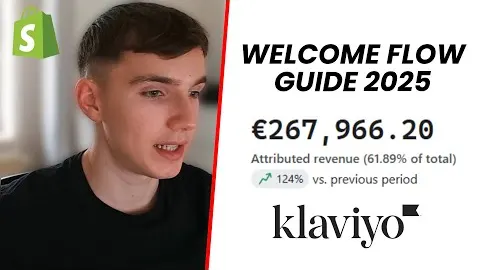
Watch Leon walk through it
Free on YouTube, in German.
Questions we get a lot
How many emails should a welcome flow have?
We build welcome flows with 5 emails over about a week. One email is too short. Most new subscribers need several touchpoints before their first order.
When should the first welcome email go out?
Immediately after signup. It delivers the offer from your pop-up, so any delay costs you orders from people who wanted to buy right away.
Should a welcome email include a discount?
If your pop-up promised one, yes, and it goes in the very first email. Give the code an expiry date and remind people before it runs out.
What is a good welcome flow conversion metric?
Track the placed order rate of the welcome flow: the share of new subscribers who make a first purchase. It tells you more than open rates do.